What is Bitcoin?
Bitcoin (BTC) is widely regarded as the pioneering cryptocurrency, often referred to as the “grandfather” of all digital currencies. It was created in 2009 by the enigmatic figure known only as Satoshi Nakamoto, almost two decades after blockchain timestamping was first proposed as a research concept. As the first decentralized currency, Bitcoin revolutionized the financial landscape by eliminating the need for trusted third-party intermediaries, allowing transactions to occur directly between users.
As of now, Bitcoin remains the most recognized, trusted, and widely used cryptocurrency in the world, solidifying its place as the foundational asset in the digital currency market.
Key Concepts of Bitcoin
Decentralization
When transacting with Bitcoin, the transaction is broadcast to the entire BTC network. The network participants, or nodes, validate the transaction, and if the majority of the network agrees, it is approved and recorded on the blockchain. What makes this system revolutionary is the removal of centralized intermediaries, such as banks or other institutions, in favor of collective validation. This decentralized approach significantly reduces the risk of manipulation or control by any single entity, ensuring a more secure and transparent transaction process. Most modern cryptocurrencies, including Bitcoin, are designed to operate in this way.
Scarcity
Bitcoin is unique in its limited supply, only 21 million BTC will ever be mined, making it a deflationary asset. Unlike fiat currencies, such as the US Dollar, which are often produced through debt and can be printed endlessly, Bitcoin’s scarcity is baked into its protocol.
This scarcity is reinforced by a process known as the halving, which occurs approximately every four years. During a halving, the reward that miners receive for validating transactions and creating new bitcoins is cut in half. This process slows down the rate at which new bitcoins are introduced into the market, further increasing their scarcity over time.
Fiat currencies are subject to inflation and devaluation, whereas Bitcoin’s fixed supply and predictable halving schedule ensure its value is determined by supply and demand, not the manipulation of a central bank. This limited supply makes Bitcoin a potential hedge against inflation and a more resilient store of value, offering a safeguard against the collapse of traditional currency systems.
Immutable Ledger
Every Bitcoin transaction is recorded in a block on the blockchain, and once it is confirmed, it becomes a permanent entry that cannot be altered without changing the entire blockchain. This immutability ensures a high degree of transparency, making Bitcoin transactions resistant to fraud or manipulation. This feature is one of the key advantages of blockchain technology, offering a secure and verifiable record of all transactions, which is particularly valuable in combating financial crimes such as money laundering and fraud.
Minable
Bitcoin offers opportunities to earn through mining or transaction facilitation. Mining involves solving complex mathematical problems that secure the Bitcoin network, rewarding miners with newly minted Bitcoin. This process is expected to remain viable until around 2140 when the last Bitcoin is projected to be mined. Alternatively, users can earn Bitcoin by facilitating transactions and collecting associated transaction fees. Both methods provide avenues for individuals to support the network and profit from the growth of the Bitcoin ecosystem.
Why Invest in Bitcoin for Retirement?
Portfolio Diversification: Adding Bitcoin to your retirement account reduces reliance on traditional markets.
Growth Potential: Bitcoin has been one of the best-performing assets of the past decade.
Inflation Hedge: Often referred to as “digital gold,” Bitcoin has a limited supply of 21 million coins, making it a potential store of value.
Tax Advantages of a Bitcoin IRA
Contributions are tax-deductible.
Taxes are deferred until withdrawals in retirement.
Contributions are made with after-tax dollars.
Withdrawals are tax-free in retirement (if conditions are met).
Existing retirement accounts can be rolled over into a Bitcoin IRA without triggering early withdrawal penalties.
By combining Bitcoin’s growth potential with tax advantages, investors can maximize their long-term retirement strategy.
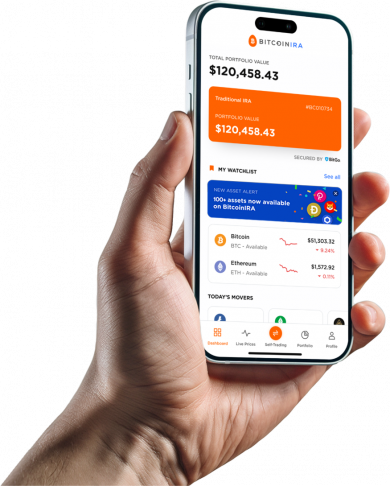
How to Buy Bitcoin with BitcoinIRA
Purchasing Bitcoin within a tax-advantaged account through BitcoinIRA is a straightforward process:
1. Open an Account: Begin by opening a BitcoinIRA account.
2. Fund Your Account: You can fund your account by transferring or rolling over funds from an existing IRA or 401k or by making a new contribution.
3. Choose Your Investments: Once your account is funded, you’re ready to start investing. You can choose Bitcoin, along with over 100 other cryptocurrency assets, to diversify your portfolio.
4. Manage Your Portfolio: Continuously monitor your investments and adjust your portfolio as needed to align with your financial goals and market conditions. Regular rebalancing can help optimize your investment strategy.