Why Portfolio Rebalancing Is Often Discussed
Portfolio rebalancing is described using simplified analogies in educational discussions. Below are several commonly cited reasons it receives attention.
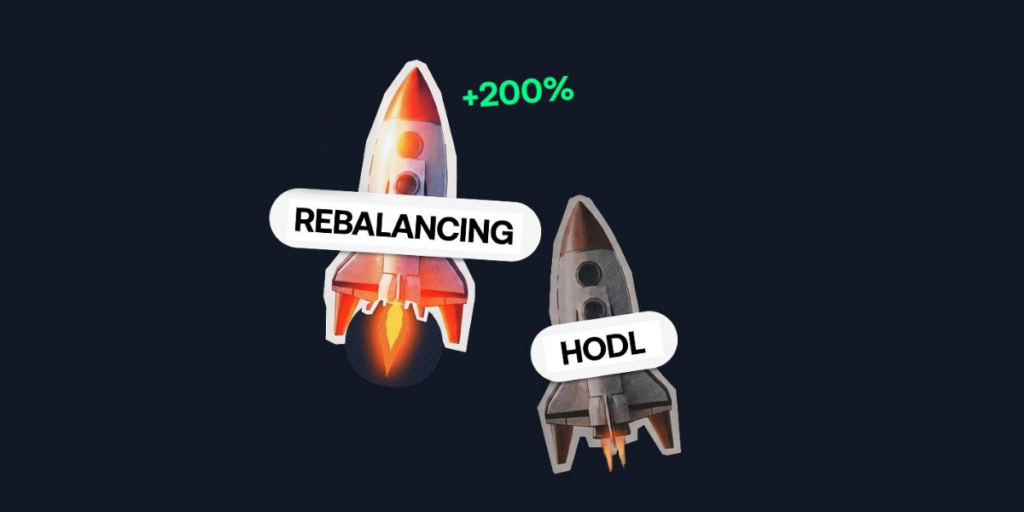
- It Captures Profits During “Pump and Dumps”: In cryptocurrency markets, asset prices can experience sharp increases followed by declines over short periods of time. Different holding approaches respond to this volatility in different ways. If you just HODL, you gain nothing. Rebalancing “shaves off” the excess value at the peak and spreads it into your other assets, locking in gains before the price drops.
- Portfolio Behavior During Flat Market Conditions: Even during periods when broader market prices appear relatively flat, individual assets may continue to fluctuate. Rebalancing is often analyzed in this context as a way allocations change over time.
- Allocation Changes and Volatility Considerations: Some discussions note that rebalancing changes portfolio weightings as asset values shift, which may affect how volatility is distributed across holdings.
- Behavioral Considerations in Portfolio Management: One commonly discussed challenge in investing is deciding when to make changes to a portfolio. Rebalancing is often described as a structured, schedule-based approach that can reduce the need for discretionary decision-making.
How Portfolio Rebalancing Has Been Examined Using Historical Data
To explore how portfolio rebalancing has been evaluated beyond theoretical models, Shrimpy conducted a historical backtest using past market trading data to simulate how different portfolio approaches might have behaved over time. In this analysis, Shrimpy compared two commonly referenced approaches: periodically rebalancing a portfolio and holding the same assets without trading activity, often referred to as “HODL.”
As part of the methodology, Shrimpy ran 1,000 simulations for each combination of portfolio size and rebalance frequency. The simulations examined portfolios containing between 2 and 10 assets, with rebalance intervals ranging from hourly to monthly. Each simulation used randomly selected assets, which was intended to reduce reliance on the selection of any particular asset.
Summary of Observations From the Analysis
Across many of the modeled scenarios, portfolios that included rebalancing exhibited different historical performance characteristics than buy-and-hold portfolios.
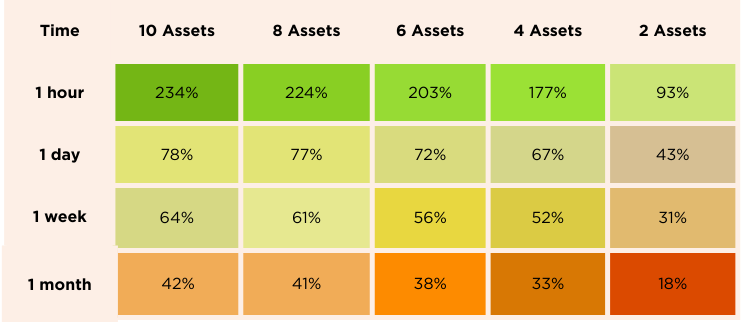
The analysis identified several recurring patterns within the historical data:
- In the strongest cases, diversified portfolios that rebalanced frequently outperformed buy-and-hold by over 200%
- When all tests were combined, the median performance improvement from rebalancing was 64% compared to holding
- After accounting for U.S. tax implications, 92% of rebalanced portfolios still outperformed HODL
Notably, the simulations did not rely on asset research or optimization, as each portfolio was constructed using randomly selected assets. This framing was intended to isolate how allocation changes were modeled within the historical dataset.
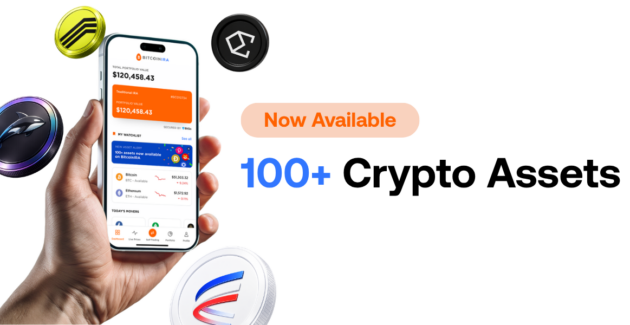
Rebalancing Made Simple with BitcoinIRA¹ Bundles
One of the biggest barriers to rebalancing for crypto investors is taxes. In a taxable account, certain transactions may result in taxable events, which can affect how frequently portfolio changes are made. That’s where BitcoinIRA changes the game.
With BitcoinIRA, investors can automatically rebalance their crypto portfolios inside a tax-advantaged retirement account, allowing individuals to adjust allocations without triggering taxable events. This makes it possible to rebalance with discipline and confidence, without worrying about short-term capital gains or complex tax reporting.
Curated Crypto Bundles for Every Investment Theme
BitcoinIRA allows users to invest in curated crypto bundles, each designed around a specific market theme or investment thesis. These bundles make diversification simple while maintaining flexibility and control.
- Crypto Blue Chip: A diversified blend of leading Layer 1 networks such as BTC, ETH, XRP, SOL, and ADA, focused on the most widely adopted and institutionally recognized crypto assets. Learn more about this bundle.
- Tokenized Economy: Exposure to the shift from traditional finance to tokenized assets and smart-contract automation, including projects like ETH, LINK, ONDO, and SKY. Learn more about this bundle.
- AI On-Chain: A high-growth basket centered on AI-focused crypto projects powering decentralized compute, machine learning, and data infrastructure, such as RENDER, FET, JASMY, and NMR. Learn more about this bundle.
- Privacy & Security: A focused allocation to privacy-first and zero-knowledge technologies enabling confidential on-chain activity, including ZEC, QNT, and VET. Learn more about this bundle.
- DeFi: Core decentralized finance infrastructure covering lending, liquidity, governance, and decentralized exchanges, with assets like AAVE, COMP, CRV, BAL, SKY, and UNI. Learn more about this bundle.
These bundles can be customized or used as-is, making them accessible to both new and experienced investors.
Flexible Rebalancing Schedule Options
When creating a bundle, users select how often rebalancing occurs from a set of available schedule options:
- Weekly rebalancing: Runs on the same day of the week and time the bundle was created.
- Monthly rebalancing: Occurs on the same calendar day each month, with automatic adjustments for shorter months.
- Quarterly rebalancing: Executes every three months.
- Manual rebalancing: Allows users to rebalance instantly with a “Rebalance Now” button, without affecting future scheduled rebalances.
This flexibility makes it easy to align rebalancing frequency with market outlook, risk tolerance, and long-term goals.
Conclusion
For investors who already believe in crypto’s long-term potential, portfolio rebalancing is the natural evolution of the HODL mindset. It doesn’t replace patience or conviction, it enhances them.
By systematically realigning your portfolio, rebalancing helps you capture gains during volatility, benefit from sideways markets, and maintain diversification without relying on emotion or market timing. As the data shows, this disciplined approach has consistently outperformed simple buy-and-hold strategies across a wide range of market conditions.
When paired with a tax-advantaged account, portfolio rebalancing becomes even more powerful. Tools like BitcoinIRA bundles allow investors to rebalance automatically, stay diversified across curated crypto themes, and make adjustments without triggering taxable events, all while keeping full control over frequency and strategy.