Key Sections
Key Takeaways
- Hardware wallets provide direct control of crypto assets through self-custody.
- Custodial storage offers institutional-grade security and IRA compliance.
- Crypto IRA investors must balance security, convenience, and regulations.
- Cold storage solutions reduce online hacking risks.
- Many Crypto IRA providers combine custody protections with offline storage.
After spending years, even decades, building retirement savings, most people can agree on one thing: keeping those assets secure is a top priority. Now that cryptocurrency is becoming part of more retirement portfolios, many investors are wondering how crypto security actually works inside a retirement account.
For personal crypto investing, hardware wallets are often seen as one of the safest ways to store digital assets. But retirement accounts work differently. Crypto IRAs must follow strict IRS rules around custody, account management, and asset protection.
Understanding the difference between hardware wallets and custodial storage can help you make smarter decisions about protecting your long-term wealth. In this guide, we’ll break down how each option works, the pros and cons of both, and the IRS regulations that shape how crypto retirement accounts are secured.
What Is a Hardware Wallet?
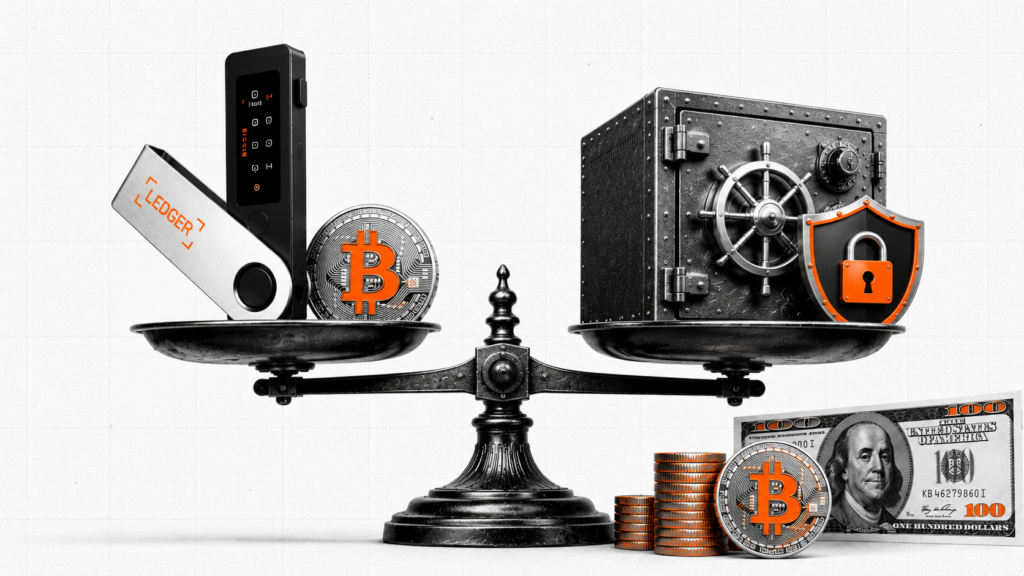
A hardware wallet is a physical device that stores cryptocurrency private keys offline. Because it remains disconnected from the internet most of the time, it is considered a form of cold storage.
Popular hardware wallet providers include Ledger and Trezor. These devices allow users to maintain direct ownership and control of their digital assets.
How Hardware Wallets Work
Hardware wallets generate and store private keys internally. Transactions are signed within the device itself, which limits exposure to online threats.
Key features include:
- Offline private key storage
- PIN and password protection
- Recovery seed phrases
- Reduced exposure to exchange hacks
- Direct self-custody ownership
What Is Custodial Storage?
Custodial storage means a third-party institution securely holds crypto assets on behalf of investors. In the case of a Crypto IRA, custodians are typically regulated companies specializing in retirement account administration and digital asset security.
These providers often use enterprise-grade cold storage systems with insurance coverage and multi-signature protection.
How Custodial Storage Works
With custodial storage, the investor does not directly hold private keys. Instead, the custodian manages asset security and account administration. Institutional custodians typically offer:
- Cold storage vaults
- Multi-signature authorization
- Insurance policies
- Regulatory compliance
- Secure recovery procedures
- 24/7 monitoring systems
Custodial solutions are designed to reduce operational risks for retirement investors who may not want the responsibility of managing private keys themselves.
Hardware Wallets vs. Custodial Storage: Key Security Differences
When comparing Hardware Wallets vs. Custodial Storage, the answer depends on how investors define safety.
- Control Over Assets
Hardware Wallets: Self-custody gives investors complete ownership and control. No third party can freeze or restrict access to funds.
However, this also means:
- Losing the recovery phrase can permanently lock assets
- User mistakes may lead to irreversible losses
- Security becomes entirely the investor’s responsibility
Custodial Storage: Custodians simplify asset management and recovery processes. Investors rely on institutional safeguards instead of personal security habits. The tradeoff is reduced direct control over private keys.
- Protection Against Hacks
Hardware Wallets: Because hardware wallets stay offline, they are highly resistant to online attacks. This makes them one of the safest options against exchange hacks and phishing attempts. Still, vulnerabilities can occur through:
- Compromised seed phrases
- Physical theft
- Fake wallet software
- Social engineering scams
Custodial Storage: Institutional custodians invest heavily in cybersecurity infrastructure. Many use:
- Geographic key distribution
- Air-gapped storage
- Multi-layer authentication
- SOC 2 compliance
- Insurance-backed custody systems
- IRA Compliance and Regulations
The IRS requires IRA assets to be administered through custodians. Improper self-custody arrangements could risk disqualifying the retirement account.
Investors should carefully verify whether self-custody is permitted under their Crypto IRA setup.
Custodial Storage Advantages
Custodial storage is typically designed specifically to maintain IRS compliance.
Benefits include:
- Simplified reporting
- Secure account administration
- Reduced legal ambiguity
- Easier tax documentation
- Professional asset oversight
For many retirement investors, compliance protection alone makes custodial storage attractive.
Which Option Is Better for Long-Term Retirement Investing?
The best storage solution depends on investor priorities, technical expertise, and risk tolerance.
How to Evaluate a Crypto IRA Custodian
Before opening a Crypto IRA, investors should ask important security questions.
- Are assets held in cold storage?
- Does the custodian carry insurance?
- What security certifications exist?
- Is multi-signature authorization used?
- How are private keys managed?
- Are assets segregated or pooled?
- What happens if the company becomes insolvent?
Strong custodians should provide transparent answers and detailed security documentation.
IRS Requirements for Crypto IRA Storage
The IRS requires IRA assets to be held by a qualified custodian or trustee. This means investors generally cannot take direct personal possession of retirement assets the same way they would with a personal crypto wallet. If an IRA holder improperly controls or uses the assets, the IRS could view it as a distribution, which may trigger taxes and penalties.
Why Custodians Matter in Crypto IRAs
Crypto IRA custodians are responsible for:
- Holding and safeguarding retirement assets
- Maintaining IRS compliance
- Handling tax reporting and documentation
- Processing contributions and distributions
- Ensuring assets remain separate from personal holdings
This structure is designed to prevent prohibited transactions and maintain the integrity of the retirement account.
IRS Compliance Often Favors Custodial Storage
For many retirement investors, institutional custodial storage provides a simpler and safer path to compliance. Qualified custodians and trustees are specifically designed to meet retirement account regulations while offering professional-grade crypto security through cold storage, multi-signature protection, and account monitoring.
Ultimately, protecting a Crypto IRA is not just about preventing hacks. It is also about ensuring the account remains fully compliant with IRS retirement rules for the long term.
How BitcoinIRA¹ Approaches Crypto IRA Security
Security² is a major focus for BitcoinIRA, unlike many traditional crypto exchanges that rely on online hot wallets, BitcoinIRA uses cold storage² infrastructure designed to keep client assets 100% offline during storage. BitcoinIRA also incorporates several institutional-grade security measures, including:
- Offline cold storage wallets² for retirement assets
- Multi-key authorization security controls
- Military-grade encryption technology
- Geographically dispersed and obfuscated asset storage
- No client assets held directly on the BitcoinIRA platform
- Custody through a regulated state-chartered trust company
- Internal controls designed to reduce single points of failure
- Up to $250 million in custodial insurance3 coverage
Another important component of BitcoinIRA’s security structure is its relationship with Digital Trust, a regulated custodian for retirement assets. Because both companies operate under the same parent organization, this vertically integrated model helps reduce some of the operational risks associated with relying on multiple third-party custodians.
Conclusion
When it comes to protecting retirement savings, security should never be an afterthought. The debate around hardware wallets vs. custodial storage ultimately comes down to balancing control, convenience, compliance, and long-term protection.
Hardware wallets offer strong self-custody and offline protection, making them popular among experienced crypto investors. However, Crypto IRAs operate under a different set of rules. Because retirement accounts must comply with IRS custody requirements, many investors choose institutional custodial solutions that provide professional security infrastructure, regulatory oversight, and simplified account management.
As the Crypto IRA industry continues to mature, security standards are evolving alongside investor expectations. Features like cold storage, multi-signature authorization, regulated custodians, and insurance protections are becoming increasingly important for safeguarding long-term retirement wealth.










 3,500+ 5-Star Reviews