Key Sections
Key Takeaways
- A Roth IRA conversion may allow future qualified crypto gains to grow tax-free³.
- Timing your conversion during lower-income years may reduce tax liability.
- Self-directed Roth IRAs can provide access to Bitcoin and other digital assets.
- BitcoinIRA¹ accounts simplify crypto retirement investing with tax advantages.
Are you considering crypto as part of your retirement strategy? While it may not be the traditional path to retirement investing, cryptocurrency can offer significant growth potential along with valuable tax advantages for long-term investors. If you already have a 401(k), there’s a popular strategy that could help diversify your retirement portfolio with Crypto while maximizing tax efficiency: converting your 401(k) to a Roth IRA.
For 401(k) owners, this strategy can be especially powerful. A Roth IRA offers tax-free qualified withdrawals, which means future gains from assets like Bitcoin may never be taxed if IRS rules are followed. Considering the long-term upside potential many investors see in crypto, this creates a compelling retirement planning opportunity.
However, a Roth IRA conversion is not a one-size-fits-all strategy. Understanding when and how to convert can help investors maximize long-term wealth while minimizing unnecessary tax burdens.
What Does It Mean to Convert a 401(k) to Roth IRA?
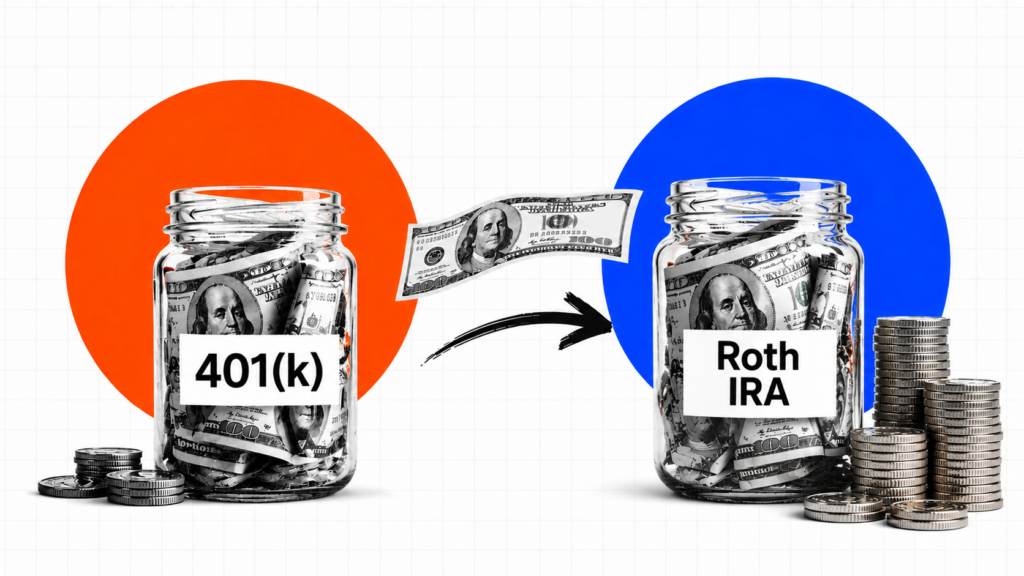
A Roth IRA conversion involves moving retirement funds from a 401(k) into a Roth IRA account. Unlike traditional retirement accounts, Roth IRAs are funded with after-tax dollars.
This means:
- You pay taxes on the converted amount today
- Future qualified withdrawals likely become tax-free
- Investment gains inside the account are not taxed annually
Traditional vs. Roth Tax Treatment
| 401(k) | Roth IRA |
|---|---|
| Contributions are pre-tax | Contributions are after-tax |
| Taxes paid during retirement withdrawals | Qualified withdrawals are likely tax-free |
| Required Minimum Distributions (RMDs) apply | No RMDs during original owner’s lifetime |
| Ideal for lower retirement tax brackets | Ideal for higher future tax expectations |
If investors believe taxes may rise in the future or expect significant crypto appreciation, a Roth conversion may offer strategic advantages.
Why Crypto Investors Are Considering Roth IRA Conversions
Cryptocurrency investors often focus on long-term appreciation. Assets like Bitcoin have historically delivered substantial returns over multi-year cycles. Holding these assets inside a Roth IRA creates the potential for:
- Tax-free crypto growth
- Tax-free retirement withdrawals
- Reduced capital gains exposure
- Better long-term wealth preservation
For example, imagine converting $100,000 from a 401(k) into a Roth IRA and investing in Bitcoin. If the investment grows to $1 million over time, qualified withdrawals could potentially avoid federal capital gains taxes entirely.
That potential tax efficiency is one reason many crypto-focused retirement investors explore Roth IRA conversions.
When Is the Best Time to Convert a 401(k) to Roth IRA?
Timing matters significantly because the conversion amount is treated as ordinary income in the year of conversion.
Situations That May Favor Conversion
- Lower Income Years: If your income temporarily drops due to career transitions, business losses, or early retirement, you may convert at a lower tax bracket.
- Market Downturns: Converting after a market correction can reduce the taxable value of assets while preserving future upside inside the Roth IRA.
- Expectations of Higher Future Taxes: If you expect tax rates to rise over the next decade, paying taxes now could become advantageous.
- Long Investment Horizon: The longer your crypto investments compound tax-free, the more powerful the Roth IRA structure becomes.
Tax Considerations Before You Convert
While the benefits can be substantial, investors should understand the tax consequences before initiating a rollover.
- Immediate Tax Liability: The amount converted from a pre-tax 401(k) is added to your taxable income. For example:
- Convert $80,000
- Add $80,000 to annual taxable income
- Potentially move into a higher tax bracket
This is why partial conversions are often used strategically over several years.
- Avoid Early Withdrawal Mistakes: A direct rollover is critical. If funds are withdrawn personally instead of transferred correctly:
- Taxes may apply
- Early withdrawal penalties could occur
- Retirement savings could shrink significantly
Working with qualified tax professionals and retirement custodians can help avoid costly errors.
How a Self-Directed Roth IRA Supports Crypto Investing
Traditional retirement accounts at large brokerage firms often limit access to cryptocurrencies. A self-directed Roth IRA allows investors to hold alternative assets, including Crypto.
Benefits of Self-Directed Crypto IRAs
- Expanded Investment Options: Investors gain access to Bitcoin, Ethereum, and other digital assets.
- Tax-Free Trading: Trades inside the Roth IRA are not taxed annually.
- Long-Term Compound Growth: Profits remain inside the retirement account without triggering capital gains taxes.
- Estate Planning Advantages: Roth IRAs can provide tax-efficient wealth transfer opportunities for beneficiaries.
Step-by-Step Guide to Convert 401(k) to Roth IRA
1. Review Your Existing 401(k)
Determine:
- Current balance
- Investment holdings
- Eligibility for rollover
- Tax status of contributions
- Check if you have any old 401(k)s
2. Estimate Tax Impact
3. Open a Roth IRA or Bitcoin IRA Account
Choose a provider, such as BitcoinIRA that supports:
- Self-directed investing
- Crypto assets
- Secure custody solutions
- IRS-compliant retirement structures
4. Initiate a Direct Rollover
Request a trustee-to-trustee transfer to avoid withholding penalties and administrative errors.
Conclusion
Choosing to convert a 401(k) to Roth IRA accounts can be a powerful tax strategy for crypto investors seeking long-term tax-free growth. While the upfront tax bill may feel significant, the potential benefits of shielding future Bitcoin gains from taxes can be substantial over decades of compounding.
The right conversion strategy depends on your income, retirement timeline, tax bracket, and investment goals. Careful planning and professional guidance are essential before making any retirement account changes.
For investors looking to combine retirement planning with cryptocurrency exposure, opening a BitcoinIRA account may provide a streamlined way to access digital assets within a tax-advantaged structure.
FAQ
1. Is it a good idea to convert a 401(k) to a Roth IRA for crypto investing?
It can be beneficial for investors who expect long-term crypto appreciation and want future qualified gains to be tax-free. However, taxes must be paid upfront during conversion.
2. Do I pay taxes when converting a 401(k) to a Roth IRA?
Yes. The converted amount is treated as ordinary income and taxed in the year of conversion.
3. Can I hold Bitcoin inside a Roth IRA?
Yes. Through a self-directed Roth IRA or Bitcoin IRA platform, investors can hold cryptocurrencies within retirement accounts.
4. How do I avoid penalties during a Roth IRA rollover?
Use a direct trustee-to-trustee rollover to avoid early withdrawal penalties and mandatory tax withholding.










 3,500+ 5-Star Reviews