Key Sections
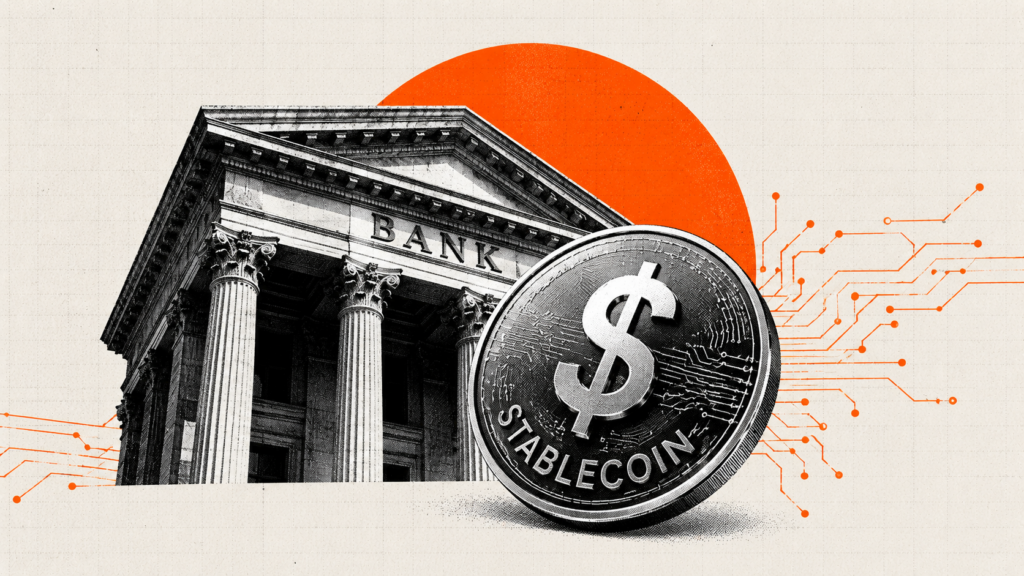
For years, banks kept their distance from crypto. The narrative was risk, volatility, and regulatory uncertainty. Now that tone is changing. Quietly at first, and now more directly, major financial institutions are beginning to explore and launch stablecoin initiatives of their own.
This shift isn’t random. It reflects a broader change in how digital assets are being viewed, not just as speculative instruments, but as infrastructure. Stablecoins, in particular, have gained traction because they solve a very specific problem: moving money quickly, globally, and with predictability in value.
As usage grows across payments, settlements, and cross-border transactions, banks are starting to recognize that this isn’t something happening on the outside anymore. It’s something they may need to integrate into their own systems to stay competitive.
This article breaks down what’s actually happening behind the scenes. Why banks are stepping into stablecoins, how these digital currencies function, and what this shift could mean for the future of finance.
Why Are Banks Creating Stablecoins?
Banks are creating stablecoins to enable faster payments, reduce transaction costs, and compete with crypto-native financial platforms offering real-time settlement. As regulatory clarity improves, stablecoins are becoming a viable way for banks to modernize how money moves across borders and within digital ecosystems.
What Are Stablecoins?
Stablecoins are a type of digital asset designed to maintain a stable value, typically by being pegged 1:1 to a fiat currency like the US dollar. Instead of fluctuating like traditional cryptocurrencies, their price is meant to stay consistent.
They exist to combine the speed and flexibility of digital assets with the stability of traditional money, making them useful for payments, transfers, and storing value without the same level of volatility seen in other cryptocurrencies.
How Bank-Issued Stablecoins Work
Bank-issued stablecoins are digital tokens created by regulated financial institutions and designed to maintain a stable value, typically pegged to a fiat currency like the US dollar.
They are backed by reserves held by the issuing bank, such as cash or cash-equivalent assets, which are intended to support a 1:1 redemption. These stablecoins are typically built on blockchain infrastructure, allowing for faster settlement and more transparent transaction tracking compared to traditional banking systems.
The key difference between bank-issued stablecoins and crypto-native stablecoins comes down to structure and oversight. Bank-issued stablecoins operate within existing regulatory frameworks and rely on traditional financial reserves, while crypto-native stablecoins are often issued by non-bank entities and may use a mix of reserves, algorithms, or other mechanisms to maintain their peg.
Why Banks Are Entering the Stablecoin Market
Banks are moving into the stablecoin space as digital payments evolve and expectations around speed, cost, and accessibility continue to change. Stablecoins offer a way for banks to modernize their infrastructure while staying competitive in a market that is increasingly influenced by blockchain-based systems.
Faster Payments and Settlement
Traditional banking systems can take hours or even days to settle transactions, especially across borders. Stablecoins allow for near-instant settlement, reducing delays and improving the overall efficiency of moving money.
Lower Transaction Costs
By using blockchain networks, stablecoins can reduce the number of intermediaries involved in a transaction. This can lower processing costs for both banks and customers, particularly for international payments.
24/7 Financial Infrastructure
Unlike traditional financial systems that operate within set hours, stablecoins run on blockchain networks that are available at all times. This enables continuous transactions without being limited by weekends or banking hours.
Competition from Crypto Companies
Crypto-native companies have already built payment systems that are faster and more flexible than traditional banking rails. Banks entering the stablecoin market is, in part, a response to this growing competition and a way to maintain relevance in digital finance.
Increasing Regulatory Clarity
As regulations around digital assets continue to develop, banks are gaining more confidence in entering the space. Clearer guidelines reduce uncertainty and make it easier for regulated institutions to participate in stablecoin issuance and usage.
Bank Stablecoins vs USDT and USDC
Bank-issued stablecoins and existing stablecoins like Tether (USDT) and USD Coin (USDC) serve a similar purpose, but they differ in how they are structured, regulated, and trusted.
Trust Model
Bank stablecoins are backed by established financial institutions, which already operate within regulated frameworks and are subject to oversight. Trust is tied to the bank itself.
USDT and USDC rely on issuer credibility and transparency around reserves. While USDC is often seen as more transparent, both depend on users trusting the issuing company rather than a traditional bank.
Regulation
Bank-issued stablecoins are expected to fall directly under existing banking regulations, including compliance, reporting, and capital requirements.
USDC operates within a regulated structure in the US, while USDT has historically faced more scrutiny due to questions around oversight and jurisdiction.
Reserves
Bank stablecoins are typically backed by deposits or highly liquid assets held within the banking system, often with clearer alignment to traditional financial safeguards.
USDC maintains reserves in cash and short-term US Treasuries with regular attestations. USDT also holds reserves but has faced ongoing questions about composition and disclosure.
Transparency
Banks are required to follow strict reporting standards, which may lead to higher levels of transparency for bank-issued stablecoins.
USDC provides regular reserve reports and is generally viewed as more transparent among crypto-native stablecoins. USDT has improved disclosures over time, but skepticism still exists in parts of the market.
Stablecoins vs Traditional Banking Systems
Stablecoins introduce a different financial infrastructure compared to traditional banking systems. While both move money, the way they do it is fundamentally different.
Settlement Speed
Stablecoin transactions can settle in minutes or even seconds, depending on the blockchain being used. Transfers happen almost instantly once confirmed.
Traditional banking systems often take hours or days, especially for cross-border payments, due to clearing processes and intermediary steps.
Fees
Stablecoin transfers can be relatively low-cost, particularly on efficient networks. Costs are typically tied to network usage rather than layered service fees.
Traditional banking fees can include wire charges, foreign exchange spreads, and intermediary bank fees, which add up quickly for international transactions.
Intermediaries
Stablecoins reduce the need for multiple intermediaries. Transactions are executed directly on blockchain networks between participants.
Traditional banking relies on a chain of institutions, including correspondent banks, clearing houses, and payment processors.
Operating Hours
Stablecoin networks operate 24/7 without downtime. Transactions can be sent and received at any time, including weekends and holidays.
Banks operate within set hours and are often closed on weekends and holidays, which can delay transaction processing.
Programmability
Stablecoins can be integrated into smart contracts, allowing for automated payments, conditional transfers, and programmable financial logic.
Traditional banking systems have limited programmability and typically require manual processes or third-party systems to achieve similar functionality.
Risks and Challenges of Bank-Issued Stablecoins
While bank-issued stablecoins offer potential advantages, they also come with risks and challenges that are still being evaluated as the market develops.
Regulatory Uncertainty
Although regulatory clarity is improving, the framework for stablecoins is still evolving across different jurisdictions. Banks must navigate changing rules, compliance requirements, and potential restrictions that could impact how these assets are issued and used.
Centralization Concerns
Bank-issued stablecoins are typically controlled by centralized institutions. This introduces counterparty risk, as users must trust the issuing bank to manage reserves properly and operate transparently, unlike fully decentralized systems.
Liquidity Risks
Stablecoins depend on the availability and management of underlying reserves. If reserves are not properly maintained or accessible during periods of high demand, liquidity pressures could arise, affecting redemption or stability.
Adoption Challenges
Widespread adoption is not guaranteed. Banks must compete with existing stablecoins, fintech platforms, and evolving digital payment systems. User trust, integration with existing financial infrastructure, and real-world utility will play a major role in determining success.
Stablecoins vs Central Bank Digital Currencies (CBDCs)
Stablecoins and central bank digital currencies (CBDCs) are often discussed together, but they serve different roles within the financial system and are issued by different entities.
Who Issues Them
Stablecoins are typically issued by private companies or financial institutions, including banks and fintech firms. In contrast, CBDCs are issued directly by central banks, such as the Federal Reserve or the European Central Bank.
Purpose
Stablecoins are primarily designed to facilitate transactions, trading, and participation in digital asset ecosystems. They are widely used for payments, remittances, and decentralized finance applications.
CBDCs are intended to serve as a digital form of a nation’s official currency. Their purpose is to modernize payment systems, improve financial inclusion, and maintain central bank control over monetary policy in a digital environment.
Control Structure
Stablecoins operate within a mix of private control and varying levels of regulatory oversight, depending on the issuer and jurisdiction. Bank-issued stablecoins are expected to follow stricter compliance frameworks but still function within a commercial structure.
CBDCs, on the other hand, are fully centralized and controlled by the issuing central bank. Transactions, supply, and policy mechanisms are managed at the government level, which can introduce different levels of oversight and control compared to privately issued stablecoins.
While both aim to digitize money, stablecoins and CBDCs reflect two different approaches: one driven by private innovation and market demand, and the other by public institutions and monetary policy objectives.
What Bank Stablecoins Could Mean for the Financial System
The introduction of bank-issued stablecoins reflects a broader shift in how financial infrastructure is evolving. Traditional systems built around batch processing and limited operating hours are being reconsidered in favor of faster, more continuous transaction models.
Stablecoins may increase competition between banks and fintech companies by narrowing the gap in speed, cost, and user experience. As financial institutions adopt similar technologies, the distinction between traditional banking services and digital asset platforms could become less pronounced.
There is also a growing intersection between banking systems and blockchain networks. If banks continue to explore issuing tokens on public or interoperable infrastructure, it could lead to greater integration between traditional finance and decentralized technologies.
At this stage, these developments are still in progress. However, they suggest a gradual shift toward more flexible, technology-driven financial systems rather than a complete replacement of existing structures.
Digital Assets and Stablecoins in Retirement Accounts
As digital assets continue to develop, some investors are exploring how they may fit within long-term financial planning, including retirement accounts.
A Crypto IRA is a type of self-directed retirement account that allows individuals to gain exposure to digital assets alongside traditional holdings. These accounts are structured similarly to other retirement vehicles, offering potential tax advantages depending on the account type and individual circumstances.
Within this framework, certain platforms provide access to cryptocurrencies and, in some cases, stablecoin-related activity such as holding or participating in blockchain-based services where permitted. The goal is to combine the emerging digital asset space with the familiar structure of retirement investing.
As with any financial decision, understanding how these assets function within a retirement account is important, including considerations around risk, regulation, and long-term strategy.
Frequently Asked Questions About Bank Stablecoins
Why are banks launching stablecoins?
Banks are exploring stablecoins to improve payment speed, reduce transaction costs, and stay competitive with crypto-native companies offering faster, always-on financial services. Growing regulatory clarity has also made it easier for institutions to participate.
Are bank stablecoins safe?
Bank-issued stablecoins are typically designed to be backed by reserves and issued within regulated frameworks, which may reduce certain risks. However, like any financial product, they still carry considerations related to liquidity, oversight, and adoption.
How are stablecoins backed?
Most stablecoins are backed by reserves such as cash, cash equivalents, or other assets held by an issuing entity. Some are backed by cryptocurrencies or use algorithmic mechanisms, though reserve-backed models are more common among institutions.
Are stablecoins regulated?
Regulation around stablecoins is evolving. In some jurisdictions, new frameworks are being developed to define how stablecoins can be issued, backed, and managed, particularly when offered by banks and regulated financial entities.
What is the difference between CBDCs and stablecoins?
Stablecoins are typically issued by private companies or financial institutions and are designed to maintain a fixed value. Central Bank Digital Currencies, on the other hand, are issued and controlled directly by central banks as a digital form of national currency.
Can banks replace crypto stablecoins?
Banks may introduce competing stablecoin models, but existing crypto-native stablecoins already have established use across trading, DeFi, and global payments. It’s more likely that both models will coexist, serving different roles within the financial system.
Understanding the Rise of Bank-Issued Stablecoins
Banks entering the stablecoin space reflects a broader shift in how financial systems are evolving. What was once viewed with skepticism is now being explored as a way to improve efficiency, reduce friction in payments, and modernize financial infrastructure.
Stablecoins address several limitations of traditional systems, including slow settlement times, restricted operating hours, and layered transaction costs. By leveraging blockchain technology, they introduce faster, more flexible ways to move value while maintaining a stable unit of account.
As adoption grows, the financial landscape is likely to become more interconnected, with traditional institutions and digital asset technologies working alongside each other. Rather than replacing existing systems entirely, bank-issued stablecoins may become part of a hybrid model that blends conventional finance with blockchain-based innovation.










 3,500+ 5-Star Reviews